English
 繁体中文
繁体中文 简体中文
简体中文 Deutsch
Product
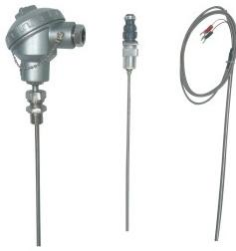
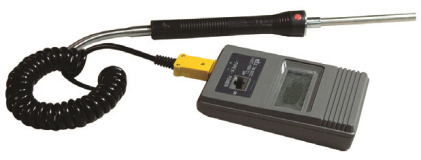

Armored Thermocouple
- Product details
-
Models: WRNK, WRMK, WREK, WRFK, WRCK, WRPK
Features: Fast thermal response, reduced dynamic error; bendable for installation; wide measuring range; high mechanical strength, good pressure resistance.
Application:Used with display meters, recorders, computers to directly measure temperature of liquids, steam, gases and solid surfaces in production processes.
Working Principle:Electrodes consist of two different conductors. Thermoelectric EMF is generated when temperature difference exists between measuring and reference ends; instruments display corresponding temperature.
Temperature Range: -40°C ~ 1300°C (varies by model)
Mounting Types:No fixed device, fixed ferrule thread, movable ferrule thread, fixed ferrule flange, movable ferrule flange
Connection Head Types: Waterproof (jet-proof), circular plug, flat plug, handle, extension wire
Sensor Materials: PtRh10-Pt, NiCr-NiSi, NiCr-CuNi, Cu-CuNi, Fe-CuNiProduct Type Features Applications Waterproof Armored Thermocouple With waterproof performance, IP65 protection rating Suitable for industrial sites in humid environments or with waterproof requirements Round Plug-in Armored Thermocouple Adopts round plug-in connection mode, easy to install and maintain Suitable for occasions requiring quick connection and disconnection Flat Plug-in Armored Thermocouple Adopts flat plug-in connection mode, space-saving Suitable for installation environments with limited space Compensation Wire Type Armored Thermocouple Integrated compensation wire to reduce signal attenuation Suitable for long-distance temperature measurement Handheld Armored Thermocouple With handle design, convenient for handheld operation Suitable for temporary temperature measurement or on-site inspection
related products
Product Inquiry
Please leave your message, we will contact you quickly after receiving it, thank you for your support!
Q
What is a thermocouple?
A
Thermocouples are the preferred solution for extreme temperature applications. They consist of two dissimilar metal wires joined at the measuring end, generating a voltage proportional to the temperature difference.
Working Principle: When two different metals are connected, the thermoelectric effect produces a voltage at the junction. This voltage increases with rising temperature, allowing measurement via reference tables.
Key Advantages:
• Temperature Range: -270°C to 2300°C (depending on type)
• Fast Response Time (typically 0.1–10 seconds)
• Robust Construction, vibration-resistant
• Relatively Low Cost
• No External Power Required
Q
What is the difference between RTD and thermocouple?
A
• RTD (Resistance Temperature Detector): Based on the principle that a metal conductor's resistance increases with temperature, it converts resistance measurements into temperature readings.
• Thermocouple: Operates on the Seebeck effect, where two dissimilar metals in contact generate a thermoelectric voltage proportional to temperature differences.
Features
• RTD: High accuracy, stable signal, excellent linearity, ideal for low to medium temperatures.
• Thermocouple: Simple structure, fast response, high-temperature resistance, wide measurement range.
Pros & Cons
• RTD Pros: High precision, strong anti-interference, reliable low-temperature performance.
Cons: Limited upper temperature range, bulkier size, slightly slower response.
• Thermocouple Pros: Broad temperature range, high-temperature tolerance, rapid response, suitable for moving/surface measurements.
Cons: Lower accuracy at low temperatures, requires cold junction compensation, weaker signal prone to interference.