English
 简体中文
简体中文 Deutsch
 Español
Product
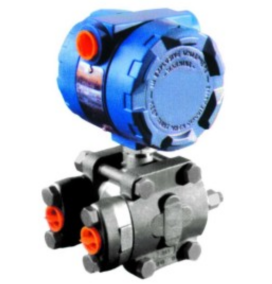
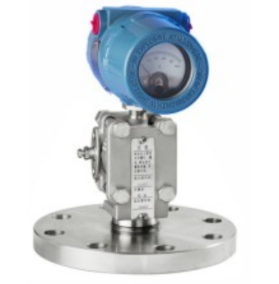
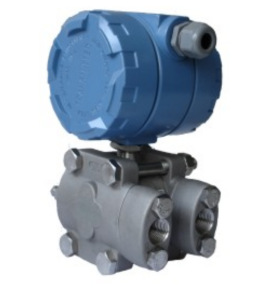
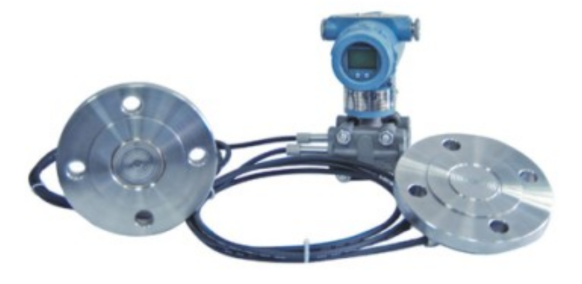
1151 Series Capacitive Transmitter
- Product details
-
1151DP Differential Pressure Transmitter
Working Principle
Based on the differential capacitance sensing principle, this capacitive transmitter has input pressure ranges of 0~7.5kPa, 0~34.4kPa, 0~186.8kPa, etc., and outputs a 4~20mA DC analog signal.
Measuring Media
Liquids, gases and steam.
1151HP High Static Pressure Transmitter
Working Principle
This high static pressure transmitter can measure differential pressure under a working pressure of 32MPa. With 32MPa pressure withstand capacity and built-in overpressure protection, it ensures reliable operation in high static pressure systems, with a standard 4~20mA DC analog signal output.
1151GP Gauge Pressure Transmitter
Working Principle
The 1151GP capacitive gauge pressure transmitter measures a minimum pressure of 1.3kPa, with a standard 4~20mA DC analog signal output.
Measuring Media
Liquids, gases and steam.
1151AP Absolute Pressure Transmitter
Working Principle & Applications
The 1151AP absolute pressure transmitter realizes high-precision absolute pressure measurement for degassing systems, distillation towers, evaporators, crystallizers and other industrial equipment. It withstands up to 10MPa overpressure, with a standard 4~20mA DC analog signal output.
Measuring Media
Liquids, gases and steam.
1151DP/GP Differential Pressure / Gauge Pressure Transmitter with Remote Seal System
Working Principle
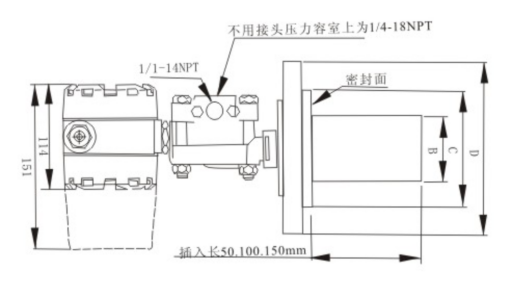
When equipped with a remote seal system, the 1151DP/GP transmitter becomes a remote-seal type, which provides a reliable measurement solution to avoid direct contact between the measured medium and the transmitter's diaphragm. It fully retains all the features of the standard 1151DP/GP series transmitters.
Typical Applications
1. When the measured medium is corrosive to the transmitter's process connections and sensing elements.
2. When high-temperature measured medium needs to be isolated from the transmitter.
3. When the measured medium contains solid suspended solids or high viscosity that may block the transmitter's process connections and pressure chambers.
4. When the measured medium is easy to solidify or crystallize when led out with impulse piping.
5. When the measured medium needs to be flushed without cross-contamination during medium replacement.
6. When sanitary conditions must be maintained to avoid contamination.
Measuring Range
0~6kPa ~ 0~10MPa
Features
Various wetted material options are available. The remote seal assembly adopts a fully welded structure for high reliability. Low-volume design of the filling chamber reduces temperature influence. DC200 series silicone oil is filled in the chamber as standard, with customization available according to user requirements.
Operating Temperature
-40℃ ~ +149℃ for standard silicone oil; 15℃ ~ 315℃ for high-temperature silicone oil.
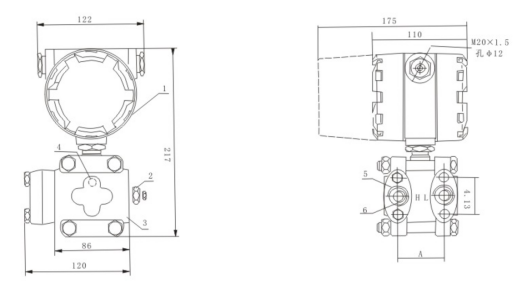
Customized model selection and detailed specification drawings are available upon request.
related products
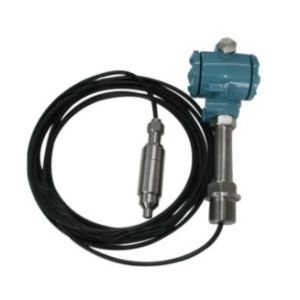
311 Series Submersible Hydrostatic Level Transmitter
311 Series Submersible Hydrostatic Level...
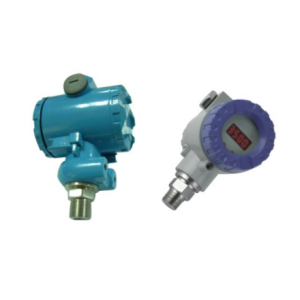
401 Series Pressure Transmitter
401 Series Industrial Pressure Transmitt...
Product Inquiry
Please leave your message, we will contact you quickly after receiving it, thank you for your support!
Q
What is a thermocouple?
A
Thermocouples are the preferred solution for extreme temperature applications. They consist of two dissimilar metal wires joined at the measuring end, generating a voltage proportional to the temperature difference.
Working Principle: When two different metals are connected, the thermoelectric effect produces a voltage at the junction. This voltage increases with rising temperature, allowing measurement via reference tables.
Key Advantages:
• Temperature Range: -270°C to 2300°C (depending on type)
• Fast Response Time (typically 0.1–10 seconds)
• Robust Construction, vibration-resistant
• Relatively Low Cost
• No External Power Required
Q
What is the difference between RTD and thermocouple?
A
• RTD (Resistance Temperature Detector): Based on the principle that a metal conductor's resistance increases with temperature, it converts resistance measurements into temperature readings.
• Thermocouple: Operates on the Seebeck effect, where two dissimilar metals in contact generate a thermoelectric voltage proportional to temperature differences.
Features
• RTD: High accuracy, stable signal, excellent linearity, ideal for low to medium temperatures.
• Thermocouple: Simple structure, fast response, high-temperature resistance, wide measurement range.
Pros & Cons
• RTD Pros: High precision, strong anti-interference, reliable low-temperature performance.
Cons: Limited upper temperature range, bulkier size, slightly slower response.
• Thermocouple Pros: Broad temperature range, high-temperature tolerance, rapid response, suitable for moving/surface measurements.
Cons: Lower accuracy at low temperatures, requires cold junction compensation, weaker signal prone to interference.